
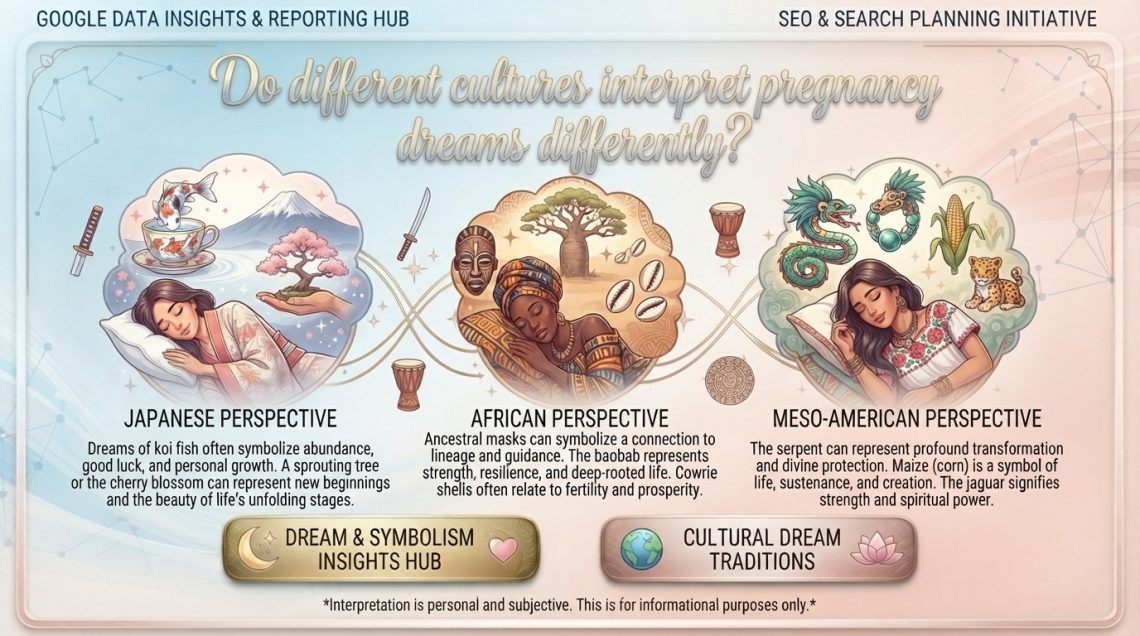
Do different cultures interpret pregnancy dreams differently? You jolt awake in the middle of the night, your mind still lingering inside a vivid, cinematic dreamscape where you experienced the profound transformation of pregnancy. As you catch your breath and try to make sense of the surreal imagery, a fascinating question crosses your mind: How would my ancestors, or people living halfway across the world, interpret this exact vision right now?
For culturally diverse, forward-thinking professionals, artists, and families navigating the vibrant multi-cultural landscapes of New York City, San Francisco, Los Angeles, Seattle (Washington), and bustling hubs throughout Texas and California, the intersection of heritage, psychology, and personal symbolism is a daily reality. When a powerful dream about pregnancy strikes, its meaning is rarely viewed through just one lens.
So, do different cultures interpret pregnancy dreams differently?
The short, definitive answer is yes, profoundly so. While modern Western psychology largely treats pregnancy dreams through the internal lens of stress, personal growth, and creative incubation, global traditions view them through an extraordinary tapestry of spiritual omens, ancestral visitations, communal blessings, and portents of future fortune.
This comprehensive, SEO-optimized guide explores how cultures across the globe decode pregnancy dreams, reviews top-rated cross-cultural sleep and journaling tools, provides actionable interpretive tips, and answers your most pressing questions.
The East-West Divide: Psychology vs. Prophecy
To understand how global interpretations diverge, we must first examine the philosophical frameworks that shape human thought across different continents.
1. The Western Psychological View: The Internal Mirror
In Western societies shaped by modern psychoanalysis (rooted in the works of Sigmund Freud and Carl Jung), pregnancy dreams are treated as internal reflections.
- The Ego and the Unconscious: Western frameworks view a pregnant belly or a newborn baby not as a prediction of external events, but as a metaphor for the dreamer’s inner psyche. It represents a new career project, personal maturation, hidden anxieties, or the integration of creative potential.
2. The Eastern and Indigenous Views: The Spiritual Portal
In contrast, many Eastern cultures (including traditional Chinese, Japanese, and Korean folk beliefs) and indigenous traditions worldwide view dreams as semi-permeable boundaries where the spiritual world communicates directly with the physical plane. A pregnancy dream is frequently treated as an auspicious external message—an omen delivered by ancestors, spirits, or divine timing.
5 Cultural Lenses: How Different Traditions Decode Pregnancy Dreams
Let’s travel across the globe to examine how specific cultural frameworks interpret the universal symbol of pregnancy.
1. East Asian Traditions: Tae-Mong (Korean Conception Dreams)
In Korean culture, pregnancy dreams hold a special, revered status known as Tae-mong (conception dreams).
- The Nature of Tae-mong: These are exceptionally vivid dreams experienced either by the mother, the father, or close family members right around the time of conception.
- Symbolic Objects: Rather than simply showing a pregnant belly, Tae-mong feature powerful natural symbols—such as a pair of gleaming golden carp swimming in a clear stream, a radiant dragon flying into the sky, a basket of pristine ripe fruit, or picking a single flawless plum off a tree. Each symbol is traditionally believed to hint at the future child’s temperament, gender, or destiny.
2. Indigenous and Native American Traditions: Visions of Guidance
For many Native American and indigenous communities worldwide, dreams are considered a sacred state of reality where the physical and spiritual worlds merge.
- The Dream as a Teacher: A pregnancy or birth dream is rarely brushed aside as random neural firing. Instead, it is often shared with tribal elders or dream interpreters who view it as a guiding vision. It can signify the arrival of a spiritual protector, an upcoming communal transition, or a reminder to honor one’s creative gifts and responsibilities to the community.
3. Middle Eastern and Islamic Traditions: Ru’ya (True Dreams)
In Islamic dream interpretation (historically exemplified by scholars like Ibn Sirin), dreams are categorized into different tiers, with true dreams (Ru’ya) acting as glad tidings or divine insights.
- Abundance and Sustenance: In traditional Islamic dream dictionaries, seeing oneself or someone else pregnant often symbolizes an increase in worldly blessings, wealth, patience, and divine sustenance (Rizq). The weight of the pregnancy is viewed as the patience required to carry a great blessing.
4. European Folkloric Traditions: Omen and Metaphor
European folk traditions often blend superstitious omens with psychological anxieties.
- The Double-Edged Sword of Folklore: In old European folklore, dreaming of a pregnant woman could symbolize impending wealth or the discovery of a long-kept secret. However, it was also occasionally viewed as a warning against gossip or taking on too many burdens prematurely, reflecting the heavy agrarian responsibilities of past centuries.
5. Latin American Traditions: El Sueño y El Destino (Dreams and Fate)
In many vibrant communities across Latin America, where family, lineage, and spirituality are deeply intertwined, vivid dreams carry emotional and relational weight.
- Communal Significance: A pregnancy dream is often discussed openly over morning coffee with family members. It is frequently interpreted as a sign of forthcoming family unity, the healing of generational rifts, or a celebration of upcoming creative and professional milestones within the family unit.
Comparative Matrix: Global Interpretations of Pregnancy Dreams
To see how cultural perspectives stack up against modern frameworks, review this comparative breakdown:
| Cultural / Philosophical Framework | Primary Lens of Interpretation | Typical Core Symbolism | View on Predictability |
| Western Psychology | Internal, introspective, and symbolic. | Personal growth, career projects, and hidden stress. | Strictly non-predictive; a mirror of the mind. |
| Korean Folk Tradition (Tae-mong) | Prophetic, familial, and elemental. | Golden carp, dragons, glowing fruit, and divine conception. | Highly prophetic regarding future character or fortune. |
| Middle Eastern / Islamic Heritage | Spiritual, moral, and blessed. | Increase in wealth, patience, and divine sustenance (Rizq). | Considered a blessed sign of hidden abundance. |
| Indigenous Global Traditions | Communal, ancestral, and guiding. | Spirit animals, natural elements, and tribal transitions. | A sacred message requiring community reflection. |
| Latin American Folklore | Relational, emotional, and celebratory. | Family unity, deep emotional bonds, and upcoming success. | A reflection of strong relational ties and future joy. |
Product Reviews: Best Tools for Recording and Exploring Cultural Dream Histories
Whether you want to document your dreams for personal psychological growth or build a rich cross-cultural dream archive, having the right tools makes all the difference. Here are four top-rated platforms.
1. The Dream Dictionary: From A to Z (Comprehensive Reference Book)
- Best For: Exploring traditional, historical, and multi-cultural symbols across global folklore.
- Why We Love It: Having a physical, comprehensive dream reference book allows you to look up how different historical eras and global cultures interpreted specific symbols like water, fruit, animals, and pregnancy.
2. Oura Ring Generation 4
- Best For: Tracking REM sleep stages and physiological rhythms that trigger vivid nighttime cognition.
- Why We Love It: By understanding your physical sleep architecture, you can see how optimal rest enhances dream recall, ensuring you remember every detail of your cultural or symbolic visions upon waking.
3. Day One Journal App
- Best For: Digital archiving of dreams, personal reflections, and cultural notes.
- Why We Love It: Day One allows you to tag dream entries, attach photos, and record audio notes the second you wake up, making it easy to track recurring cultural symbols over months and years.
4. Hatch Restore 2 Smart Sleep Assistant
- Best For: Creating a calm, intentional wind-down routine free from digital distractions.
- Why We Love It: By setting a soothing nighttime atmosphere with gentle ambient soundscapes, the Hatch helps you detach from chaotic workday stress and slip into deeply reflective sleep.
Actionable Tips: How to Honor Your Dreams Across Cultural Frameworks
- Keep an Open, Multi-Lens Mind: Don’t limit your dream analysis to just one perspective. If a dream feels deeply symbolic, look at it through both a modern psychological lens (what project am I building?) and a traditional cultural lens (what blessing or warning is my heritage whispering?).
- Record Details Immediately: Cultural symbols fade fast. Keep a journal by your bed to jot down specific colors, animals, or numbers that appeared in your pregnancy dream before they evaporate from your short-term memory.
- Discuss with Trusted Elders or Peers: In many rich cultural traditions, dreams are meant to be shared over conversation. Discussing a vivid dream with a parent, partner, or cultural mentor can unlock surprising historical or personal insights.
- Ground the Message into Action: Whether your dream represents a psychological breakthrough or a cultural omen of abundance, use that morning energy to fuel a positive waking action—such as starting a new project or reaching out to a loved one.
10 Comprehensive FAQs
1. Why do different cultures place such high value on pregnancy dreams?
Pregnancy is a universal human milestone representing life creation, continuity of generations, and deep vulnerability. Because it touches the core of human existence, cultures across history naturally elevated it to a place of profound symbolic importance.
2. What is a Tae-mong, and who usually experiences them?
A Tae-mong is a traditional Korean conception dream. While experienced by the mother, they are frequently dreamed by fathers, grandmothers, or close relatives, and are believed to foretell the arrival and personality of a new child.
3. Do modern psychologists believe cultural dream interpretations have any validity?
Modern psychology views cultural interpretations through the lens of collective unconscious and shared societal frameworks. While they aren’t scientifically “predictive,” they hold immense psychological and emotional validity for the dreamer.
4. Why do animal symbols (like fish or dragons) frequently appear in global pregnancy dreams?
In many Eastern and indigenous traditions, animals represent elemental forces of nature, strength, and fluidity. Seeing them in a pregnancy dream connects the human experience of creation to the greater rhythms of the natural world.
5. Are pregnancy dreams considered good luck in most cultures?
In the vast majority of global cultures and traditions, pregnancy and birth dreams are viewed as overwhelmingly positive symbols representing abundance, new beginnings, and future prosperity.
6. Can my own cultural background subconsciously alter how my dreams manifest?
Yes! Your brain builds dream narratives using the raw data of your waking life, including your cultural upbringing, religious beliefs, and familial stories. If you grew up hearing about conception omens, your brain may utilize those exact symbols.
7. What if my cultural tradition views a pregnancy dream as a bad omen?
Some older European or regional superstitions viewed certain dream variations as warnings of gossip or lost burdens. If a dream feels unsettling, modern psychology suggests reframing it as a sign of internal stress to be resolved rather than a fixed curse.
8. How can I research the cultural meaning of a specific dream symbol?
Look for academic texts on comparative mythology, global folklore archives, or reputable cross-cultural dream dictionaries written by anthropologists and cultural historians.
9. Do men experience culturally significant pregnancy dreams in non-Western societies?
Yes. In many traditions, prospective fathers experience vivid conception or responsibility dreams that are interpreted as spiritual initiations into fatherhood and community leadership.
10. Should I alter my life decisions based on a culturally interpreted dream?
While dreams provide rich psychological insight and connect us to our heritage, major life decisions should always be grounded in practical waking reality, personal values, and thoughtful planning.
Conclusion
Whether viewed through the introspective lens of modern Western psychology or revered as a prophetic Tae-mong across Korean heritage, a sacred ancestral message in indigenous traditions, or a sign of divine abundance in Middle Eastern folklore, pregnancy dreams remain one of the most powerful universal experiences of the human mind. For diverse, ambitious individuals shaping their lives across New York, San Francisco, Los Angeles, Seattle, Texas, and California, exploring these rich global interpretations offers a profound bridge between our inner psychology and our shared cultural heritage. Honor your dreams, protect your rest, and let your nocturnal visions inspire your waking world.


